





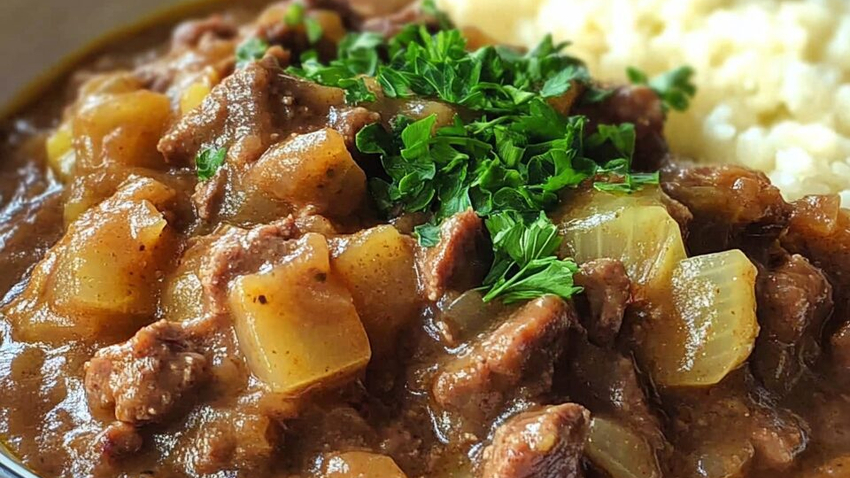
Dutch Hachee Stew
| Prep time: | 30 minutes |
| Cook time: | 3 hours |
| Total time: | 3 hours 30 minutes |
| Servings: | 6 |
| Cuisine: | Dutch, Stews, Dinners, Comfort Food |
Hachee Origins
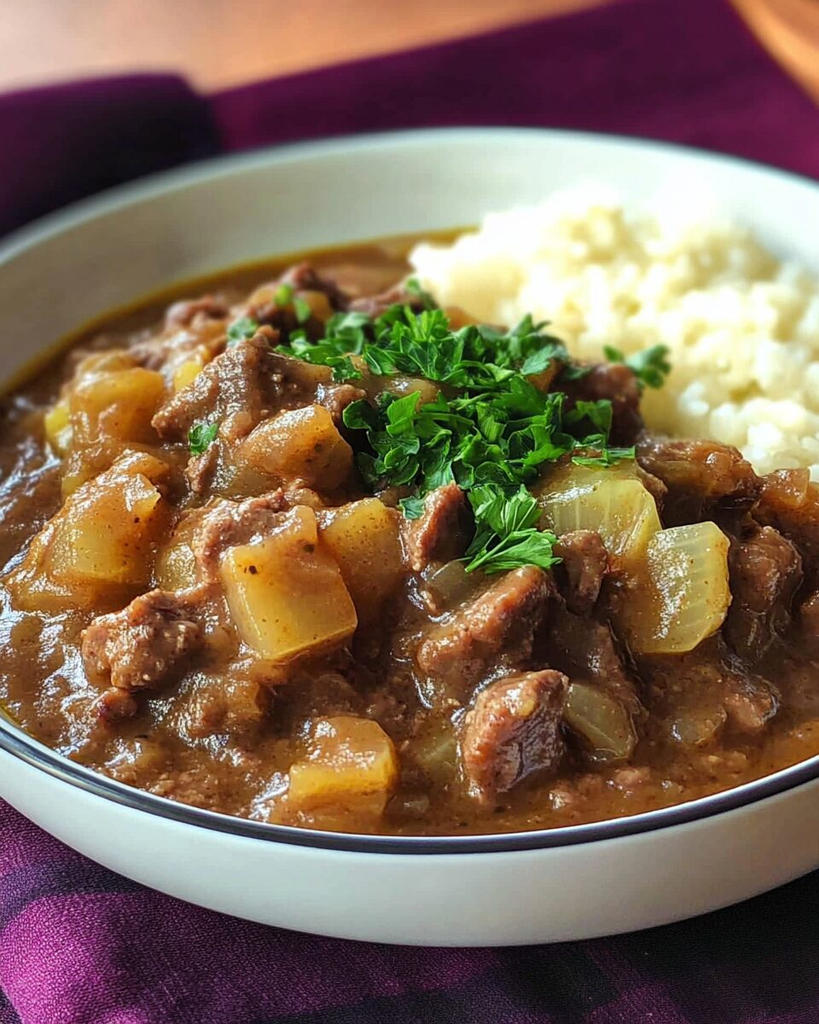
Hachee is the epitome of Dutch comfort food, blending tender beef with caramelized onions in a rich and flavorful sauce. The use of warming spices like cloves and juniper berries gives this dish its signature depth, making it a beloved staple for cold evenings. Traditionally served with creamy mashed potatoes and tangy braised red cabbage, Hachee offers a balance of textures and flavors. Whether you’re reminiscing about Dutch traditions or exploring new cuisines, this hearty stew promises to satisfy both the stomach and the soul.
Hachee dates back to the Middle Ages, making it one of the oldest traditional dishes in Dutch culinary history. The name itself derives from the French word hacher, which means “to chop,” hinting at its humble beginnings as a dish that utilized leftover meat and vegetables.
In medieval households, resourcefulness was key to survival, and Hachee was a prime example of this. Tough cuts of meat, which were affordable and accessible, were tenderized through long, slow cooking. Vinegar was a common addition, as it helped to break down the meat fibers while adding a tangy brightness to the dish. Similarly, caramelized onions provided a natural sweetness that balanced the flavors. Over time, this peasant dish evolved into a much-loved staple of Dutch home cooking.
The Unique Flavor Profile of Hachee
What sets Hachee apart from other stews is its distinctive flavor. Unlike many beef stews that rely heavily on herbs and vegetables for their taste, Hachee uses a relatively simple combination of ingredients to achieve its complexity. The equal ratio of beef to onions is key to its flavor. Onions are caramelized to bring out their sweetness, and spices like cloves, juniper berries, and black peppercorns add a warm, aromatic depth.
The addition of red wine vinegar provides a tangy counterbalance to the richness of the beef, creating a harmonious blend of savory, sweet, and slightly sour notes. Some even compare Hachee to German Sauerbraten due to the similar use of vinegar and warming spices, but Hachee maintains its unique identity through the balance of its core ingredients.
A Dish Rooted in Dutch Culture
Hachee isn’t just a dish; it’s a cultural icon. In the Netherlands, it’s often considered a quintessential winter meal, providing much-needed warmth and sustenance during the colder months. Many Dutch families have their own variations of the recipe, passed down through generations. Some might use different cuts of meat, add more spices, or include a splash of wine.
You’ll also find pre-made versions of Hachee in Dutch supermarkets, showcasing its popularity as a convenient comfort food. However, nothing compares to the homemade version, where the slow-cooking process fills the kitchen with a rich, savory aroma, building anticipation for the meal.
Serving Hachee the Traditional Way
Hachee is traditionally served with aardappelen (potatoes), typically mashed to create a creamy bed for the stew. The starchiness of the potatoes soaks up the flavorful sauce, ensuring that none of the rich gravy goes to waste. Another classic accompaniment is rode kool met appeltjes, a dish of braised red cabbage with apples. The slight tang and sweetness of the cabbage beautifully complement the stew, adding both color and a vibrant flavor contrast to the plate.
In some regions, a serving of applesauce or a slice of crusty bread is included to round out the meal. These accompaniments reflect the Dutch love for balancing hearty dishes with lighter, tangy, or sweet sides.
Tips for Making the Perfect Hachee
↬ Choose the Right Cut of Meat: Opt for stewing beef like chuck or brisket, as these cuts are ideal for slow cooking. Their marbling ensures a tender, flavorful result.
↬ Caramelize the Onions Properly: Take your time with the onions. Proper caramelization adds sweetness and depth to the stew, which is crucial for achieving the authentic flavor profile.
↬ Don’t Skip the Vinegar: The tanginess of vinegar is a defining characteristic of Hachee. If you prefer a slightly sweeter flavor, you can adjust the amount to your liking, but don’t omit it entirely.
↬ Cook Low and Slow: Patience is key. The long cooking time allows the flavors to meld and the meat to become melt-in-your-mouth tender.
↬ Customize the Seasonings: While the traditional spices are cloves, juniper berries, and peppercorns, feel free to experiment with other seasonings to suit your taste.
Ingredients:
2 lbs stewing beef (e.g., chuck), cubed into ½-inch pieces
3 Tbsp butter
2 lbs yellow onions (about 4 large), finely chopped
¼ cup all-purpose flour
4 cups high-quality beef broth or stock
3 large bay leaves
4 whole cloves
4 juniper berries
10 black peppercorns
2 Tbsp red wine vinegar
¾ tsp salt
¼ tsp freshly ground black pepper
Instructions:
Melt butter in a Dutch oven over medium-high heat. Brown the beef in batches to avoid overcrowding, ensuring all sides are browned. Remove and set aside, leaving browned bits in the pan.
Add onions to the pan with more butter if necessary. Cook until deeply caramelized, about 25 minutes. Stir in flour until combined.
Return the beef to the pot. Pour in the beef stock, ensuring the beef is just covered. Stir in bay leaves, cloves, juniper berries, peppercorns, red wine vinegar, salt, and pepper.
Increase the heat to bring the mixture to a boil. Reduce the heat to low, cover, and simmer for 2½ hours.
Uncover and simmer for an additional 30 minutes to thicken the sauce. Adjust seasoning with more salt, pepper, or vinegar to taste.
Discard the bay leaves, cloves, and juniper berries before serving. Serve hot with mashed potatoes and braised red cabbage for a complete meal.


Leave a Reply
You must be logged in to post a comment.